
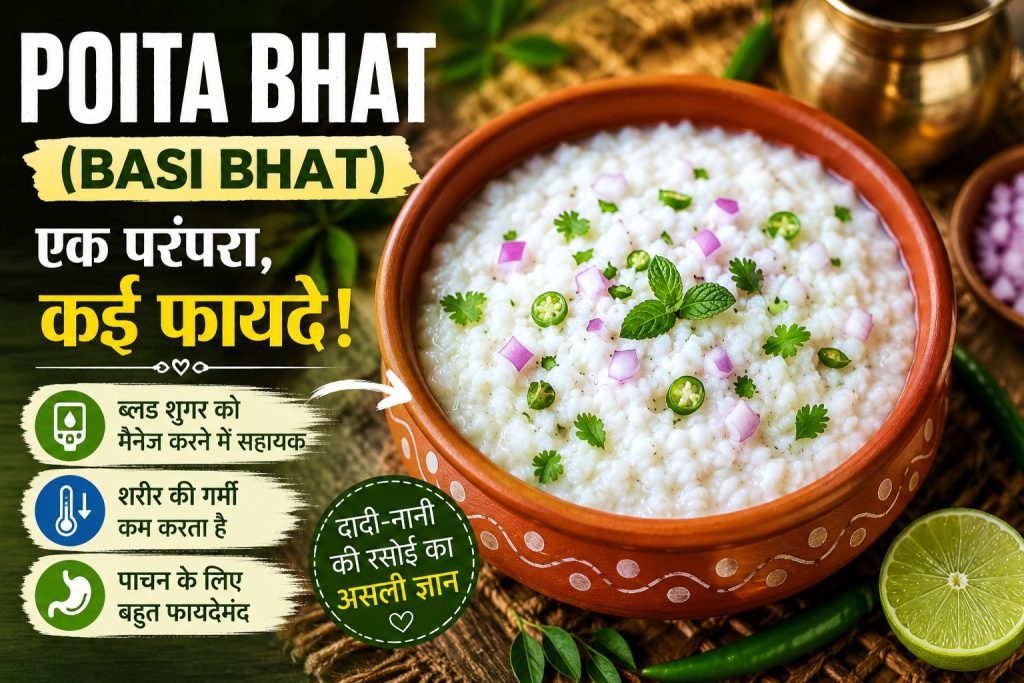

It’s Grandma’s Wisdom (And One of India’s Simplest Fermented Rice Recipes)
Sometimes, while searching for the latest healthy recipes, we go so far ahead that we forget the treasures hidden in our own dadi’s and nani’s kitchen.
I still remember those warm summer mornings. In one corner of the kitchen, there was always a bowl of leftover rice soaking in water overnight.
I would ask my dadi,
“Dadi, who is going to eat this stale rice?”
She would simply smile and say,
“It’s not stale, beta… overnight it has become even better.”
At that time, I didn’t understand what she meant.
But today, when the same traditional food is celebrated as fermented rice, I always remember that smile on her face.
This humble dish is called Poita Bhat—one of India’s oldest and simplest fermented rice recipes, passed down through generations.
What Is Poita Bhat?
Poita Bhat is a traditional dish made by soaking cooked rice in clean drinking water overnight. By morning, the rice develops a mild tangy flavor due to natural fermentation.
This simple meal has been enjoyed for centuries across Eastern India, especially during the hot summer months, because it is light, refreshing, and easy to digest.
While modern nutrition has started recognizing fermented foods, our grandparents had already made them a part of everyday life.
Fermented Rice Benefits: Why Was It a Summer Favorite?
Today, many people search for fermented rice benefits, and it’s easy to see why this traditional food is gaining popularity again.
When cooked rice cools, part of its starch can change into resistant starch. Resistant starch acts as food for the beneficial bacteria living in our gut.
When the rice is soaked overnight, natural fermentation may begin, depending on temperature and hygiene.
Some potential fermented rice benefits include:
- May support a healthy gut microbiome through natural fermentation.
- Can contain increased resistant starch after cooling.
- Feels light and refreshing, especially during hot weather.
- Helps reduce food waste by using leftover rice.
- Provides energy from carbohydrates while being a simple traditional meal.
- Connects us with generations of Indian food wisdom.
Although these are potential benefits, individual nutritional values can vary depending on preparation, rice variety, and fermentation conditions.
Easy Fermented Rice Recipe (Poita Bhat Recipe)
If you’re looking for a simple fermented rice recipe, this traditional Poita Bhat is one of the easiest to make.
Ingredients
- 1 bowl cooked rice (leftover from dinner)
- Clean drinking water
- Salt to taste
- Finely chopped onion
- Green chillies (optional)
Method
- Place the leftover cooked rice in a clean bowl.
- Add enough clean drinking water to completely cover the rice.
- Leave it covered overnight at room temperature.
- The next morning, drain excess water if desired.
- Add salt, chopped onion, and green chillies.
- Serve with homemade pickle, mashed potato (Aloo Bharta), roasted vegetables, or any simple traditional side dish.
And that’s it—your homemade fermented rice recipe is ready to enjoy.
Is Fermented Rice Good for People with Diabetes?
One important thing to remember is that fermented rice is still rice.
If you have diabetes, don’t assume that overnight soaking means it won’t affect your blood sugar.
Rice still contains carbohydrates, and everyone’s blood sugar response is different.
The amount you eat, the type of rice, what you pair it with, and your overall health all play a role.
Always enjoy it in appropriate portions and follow the advice of your doctor or registered dietitian.
More Than Food—A Tradition Worth Preserving
Our grandmothers never studied nutrition from thick textbooks.
They never counted calories.
They didn’t have health apps or fitness trackers.
Yet they understood the seasons.
They understood food.
And most importantly, they understood what their family’s body needed.
Their kitchen wasn’t driven by food trends—it was guided by experience, observation, and generations of wisdom.
So, the next time someone calls this “stale rice,” just smile and say:
“This isn’t old food… it’s the wisdom of our traditional Indian kitchen.”
Because here at Cookations, we’re not just sharing recipes.
We’re bringing back the stories, traditions, forgotten flavors, and timeless wisdom hidden behind every meal.